What Is Trading Psychology? Why It Matters for Intraday Traders
What Is Trading Psychology?
When you first start trading, it's easy to believe that success is mostly about finding the right strategy.Find a good setup. Enter at the right price. Keep a stop-loss. Book profits at the right time.
Simple enough, right?
But anyone who has spent enough time in the market knows that trading doesn't always work out that neatly.
You can understand a setup perfectly and still hesitate when it's time to enter. You can plan to exit at a particular level but change your mind when the price starts moving against you. You can even make a profitable trade and immediately take another one because you want to earn more.
Knowing what to do and actually doing it when money is on the line are two very different things.
That's where trading psychology comes in.
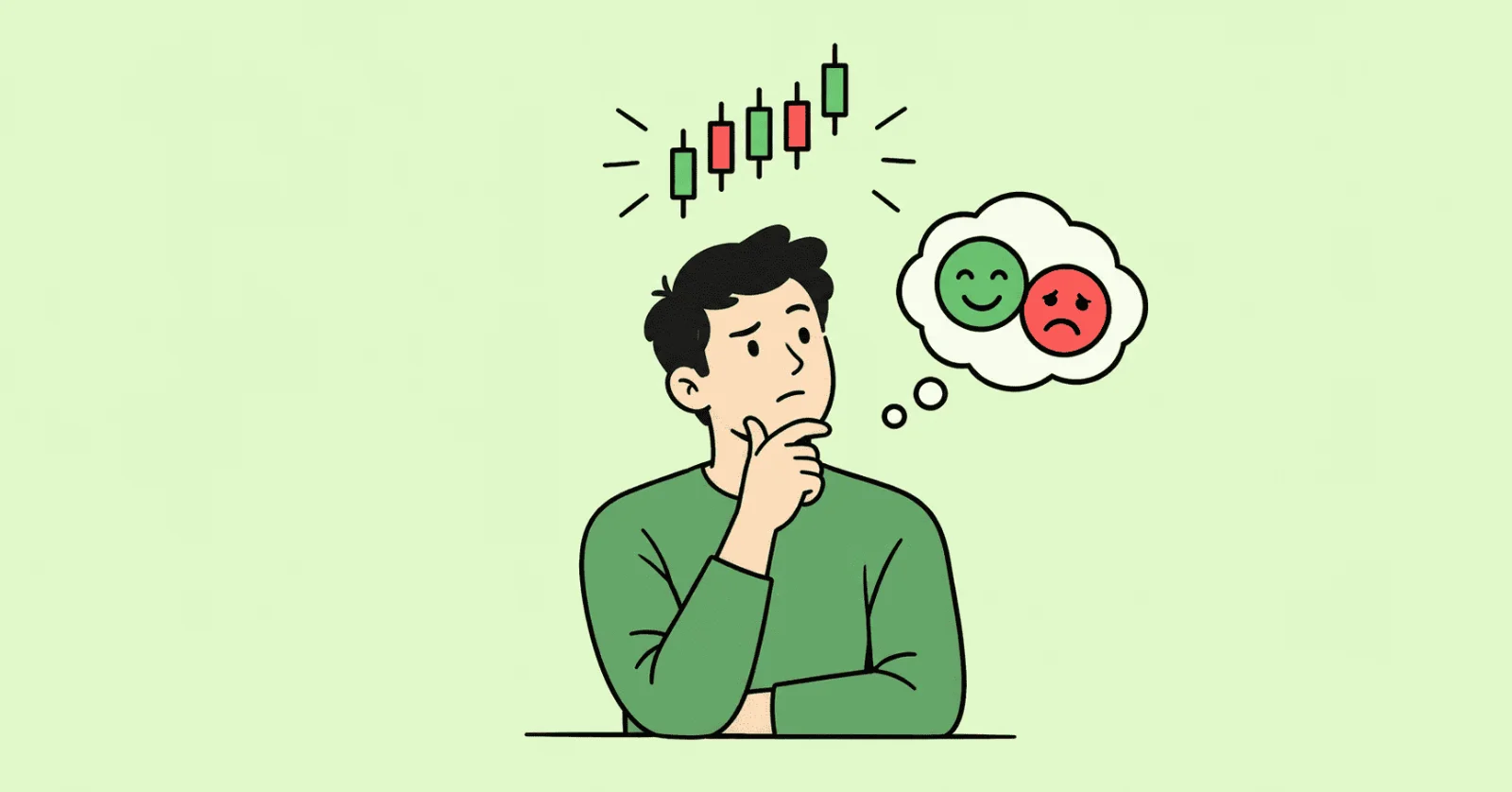
Trading psychology is the way your emotions, thoughts, habits, and behaviour influence your trading decisions. It includes how you respond to losses, handle profits, manage uncertainty, and follow your trading plan when the market doesn't behave as expected.
For intraday traders, this matters because decisions often have to be made within minutes or even seconds. There's little time to step back and think calmly when the market is moving quickly.
And sometimes, the biggest challenge isn't understanding the market. It's managing your own reaction to it.
Why Does Trading Psychology Matter in Intraday Trading?
Intraday trading puts you in a situation where you're constantly making decisions under uncertainty.You never know with complete certainty whether your next trade will be profitable. Even a setup that has worked many times before can fail today.
That's normal. Losses are part of trading.
The problem begins when you start reacting emotionally to those losses instead of treating them as part of the process.
Imagine this situation.
You enter a trade according to your plan. The price moves against you and hits your stop-loss. You take a loss.
At this point, your trading plan says you should evaluate the next opportunity carefully.
But your mind has a different idea.
You want your money back. You start looking for another setup, perhaps one you wouldn't normally take. You enter the trade, lose again, and feel even more frustrated.
One planned loss has now turned into a series of emotionally driven decisions.
The original trading strategy may not have been the problem at all. The problem was what happened after the first loss.
This is why trading psychology matters. It influences not just individual trades but also the decisions you make throughout the trading session.
A trader who can accept a loss without feeling compelled to recover it immediately has a better chance of sticking to their plan.
That doesn't guarantee profits. It simply helps prevent emotions from creating additional problems.
5 Common Psychological Challenges Every Intraday Trader Should Understand
Let's look at some situations that intraday traders commonly encounter and understand how these psychological challenges affect their decisions.1. Fear: When You Know the Setup but Can't Execute It
You've analysed the chart. Your setup is present. The entry conditions match your strategy.But you hesitate.
What if this trade loses? What if the market reverses immediately after you enter? What if you lose money again today?
The price starts moving, and you miss the entry.
A few minutes later, the trade reaches your planned target.
Now you're frustrated because you knew what to do but couldn't bring yourself to do it.
This is one way fear affects trading decisions.
Fear can also make traders exit profitable positions too early. Instead of following their exit rules, they close a trade simply because they don't want to see their unrealised profit disappear.
The goal isn't to eliminate fear completely. That's unrealistic.
The goal is to have a trading plan that defines your entry, stop-loss, and exit conditions before emotions take over.
When your decision is based on predefined rules rather than momentary discomfort, it's easier to act consistently.
2. Greed: When One Profitable Trade Is Never Enough
Imagine you've reached your daily profit target.You planned to stop trading, but the market is still moving. Another setup appears, and you think, "One more trade won't hurt."
You enter.
Perhaps the trade makes money. That encourages you to take another.
Or perhaps you lose some of your earlier profits and start trading more aggressively to recover them.
The problem isn't wanting to make money. That's why you're trading in the first place.
The problem is allowing the desire for more profit to override the rules you established before the trading session began.
Greed can lead to overtrading, oversized positions, and unnecessary exposure to market risk.
A trading session doesn't become successful simply because it produces a large profit. The quality of the decisions matters, too.
Sometimes, stopping when your plan says to stop is a better decision than taking another trade.
3. Revenge Trading: Trying to Win Back What You Lost
This is one of the most dangerous emotional patterns in intraday trading.You take a loss. It bothers you.
Instead of accepting it, you start thinking about getting your money back before the market closes.
You increase your position size, enter trades without proper confirmation, or ignore your usual risk limits.
At that moment, you're no longer evaluating opportunities objectively. You're reacting to the previous result.
The market doesn't know that you've lost money. It doesn't owe you a profitable trade, and it won't change direction just because you need to recover your losses.
A previous loss is not a reason to take the next trade.
The next trade should meet your strategy's conditions, regardless of what happened earlier.
If you notice that you're trading to recover money rather than because a valid setup exists, stepping away from the screen may be the most sensible decision.
Revenge trading is also closely connected to other behavioural patterns that can damage your results. Understanding these patterns is an important step towards avoiding common trading mistakes.
4. Impatience: Taking Trades Because Nothing Is Happening
Not every trading session offers good opportunities.
Sometimes the market moves sideways. Sometimes your preferred setup never appears. Sometimes you spend an hour watching charts without finding a trade that meets your criteria.
That can feel frustrating, especially when you've set aside time to trade and want to make money.
So you begin lowering your standards.
A setup that was almost good enough suddenly looks acceptable. You enter because you don't want to finish the session without a trade.
But being active and being productive are not the same thing.
Intraday trading doesn't require you to participate in every market movement.
If your strategy only produces two valid setups in a session, taking those two setups may be more appropriate than forcing five additional trades.
The ability to wait is part of the trading process.
Not taking a trade is also a decision, and sometimes it's the right one.
5. Overconfidence: When Recent Success Changes Your Behaviour
Psychological mistakes don't happen only after losses. Profits can create problems, too.
Suppose you've had three profitable sessions in a row.
You begin feeling more confident. Your strategy seems to be working, and you start believing that you understand the market particularly well.
Then you increase your position size, loosen your entry criteria, or take trades you would previously have avoided.
A few profitable sessions have changed the way you approach risk.
This is overconfidence.
A winning streak doesn't mean every future trade will be profitable. Market conditions can change, and even a good strategy experiences losing periods.
Confidence is useful when it's supported by preparation and evidence. It becomes dangerous when it encourages you to ignore risk.
Your trading rules should remain consistent even when everything seems to be going your way.
The Difference Between a Good Trade and a Profitable Trade
This is something every intraday trader should understand.
A profitable trade isn't automatically a good trade.
And a losing trade isn't automatically a bad trade.
Imagine you follow your strategy correctly. You identify a valid setup, calculate your position size, place your stop-loss, and enter according to your rules.
The trade hits your stop-loss.
You lose money, but you followed your process.
Now consider another situation.
You enter a trade without proper analysis, ignore your stop-loss, and hold the position longer than planned. By luck, the market reverses, and you make a profit.
The first trade lost money. The second made money.
But which decision-making process would you want to repeat?
The first.
Why? Because trading is about making decisions under uncertainty. You can control your preparation, risk management, and execution, but you cannot control the market's next move.
If you judge every decision only by its immediate financial result, you may end up reinforcing bad habits simply because they occasionally make money.
Instead, evaluate whether you followed your trading plan.
Over a meaningful sample of trades, reviewing both your results and your decision-making process can help you understand whether your approach is working and where you need to improve.
How to Improve Your Trading Psychology
You don't need to become emotionless to become a more disciplined trader.
You need to recognise your patterns and build a process that helps you make better decisions when emotions appear.
Here are five practical ways to start.
1. Create Your Trading Rules Before the Market Opens
Don't wait until you're watching a moving chart to decide how much you're willing to risk.
Before the session begins, define your entry conditions, stop-loss rules, position sizing, and circumstances in which you'll stop trading.
You can also establish a maximum daily loss and a limit on the number of trades you take.
These rules won't eliminate uncertainty, but they'll reduce the number of decisions you have to make under pressure.
2. Stop Treating Every Loss as a Personal Failure
A losing trade doesn't automatically mean you're a bad trader.
Even a well-tested strategy can produce losing trades. What matters is whether the trade was taken according to your plan and whether the risk was appropriate.
After a loss, ask yourself:
- Did I follow my entry rules?
- Was my position size appropriate?
- Did I respect my stop-loss?
- Was the loss within my planned risk limits?
These questions help you separate a normal trading loss from a mistake that needs correcting.
3. Recognise When Your Emotions Are Influencing Your Decisions
You don't always need to act on the first thought that enters your mind.
If you feel an urgent need to recover a loss, increase your position size, or enter a trade because you're afraid of missing out, pause.
Ask yourself whether the trade meets your predefined criteria.
If it doesn't, let it go.
If your emotions are too strong for you to follow your rules, consider ending the session.
The objective isn't to suppress every emotion. It's to prevent temporary emotional reactions from dictating your trading behaviour.
4. Maintain a Trading Journal
This is where trading psychology becomes something you can actually observe and measure over time.
A trading journal shouldn't record only your entry price, exit price, and profit or loss.
It should also help you understand why you took a trade and how you behaved during the session.
For example, record whether you followed your plan, exited early out of fear, entered without confirmation, or took another trade immediately after a loss.
After several sessions, review your records.
You may discover that your largest losses often follow an initial losing trade. Perhaps you exit profitable positions too early, or perhaps your results deteriorate when you take too many trades.
Without records, these patterns can be difficult to recognise accurately. You may remember the most frustrating trades while overlooking the decisions that repeatedly cause problems.
A journal gives you something more useful than memory: a record you can review.
If you're building this habit, read our guide on how to improve trading discipline. It explores how consistent habits and rule-based decisions can help you approach trading more systematically.
5. Review Your Behaviour, Not Just Your P&L
At the end of a trading session, it's tempting to look at one number: your profit or loss.
But that number doesn't explain everything.
A profitable session might contain several rule violations that happened to work out. A losing session might contain disciplined trades that simply didn't produce the expected results.
Ask yourself:
- How many trades followed my strategy?
- Did I take any unnecessary trades?
- Did I respect my risk limits?
- Did I make decisions based on fear, greed, or frustration?
- What is one behaviour I should improve in my next session?
You don't need to fix every weakness at once.
Choose one recurring problem, work on it, and review whether your behaviour changes over time.
Improving trading psychology is a process, not a single decision.
Why Trading Discipline and Trading Psychology Go Together
Trading psychology helps explain why you make certain decisions. Trading discipline determines whether you follow your rules despite those influences.
For example, you might recognise that revenge trading is harmful. That understanding is useful, but it doesn't automatically prevent you from revenge trading after a frustrating loss.
Discipline means following your predefined process even when your emotions encourage you to do something else.
That might mean accepting a stop-loss, waiting for a valid setup, refusing to increase your position size impulsively, or stopping when you reach your daily limit.
However, discipline shouldn't mean following a strategy blindly forever.
If your records consistently show that a strategy isn't performing as expected, you should evaluate it using appropriate evidence and testing. The important distinction is between making a considered adjustment and changing your rules impulsively in the middle of a trading session.
A disciplined trader can review and improve a strategy without allowing every winning or losing trade to dictate the next decision.
How Save Your Trade Can Help You Understand Your Trading Behaviour
Understanding trading psychology requires more than reading about fear, greed, and discipline. You need to examine your own trading decisions.
That's why keeping a trading journal can be useful.
Save Your Trade helps intraday traders review their trading activity and understand their performance over time.
Instead of relying entirely on memory, you can use your trading records to examine your results, identify recurring mistakes, and reflect on your trading discipline.
The goal isn't to tell you which trade to take next or promise better returns.
It's to help you understand what you've been doing, recognise patterns in your behaviour, and make more informed decisions about how you approach trading.
Because sometimes, the most useful lesson from a trading session isn't how much money you made or lost.
It's understanding why you made the decisions that led to that result.
Final Thoughts
Trading psychology isn't about eliminating fear, greed, or frustration. Those emotions are normal responses to uncertainty, especially when real money is involved.
The challenge is learning to recognise them before they start controlling your decisions.
You will still experience losing trades. You may still feel tempted to take an unnecessary trade or close a position too early. The difference comes from how you respond to those moments and whether you learn from them.
Build a trading plan. Respect your risk limits. Keep a journal. Review your decisions honestly.
And remember that a single profitable session doesn't prove you've mastered trading, just as a single losing session doesn't mean you've failed.
Your goal isn't to win every trade. It's to develop a repeatable process, manage risk responsibly, and keep improving the way you make decisions.
Over time, understanding your own behaviour can become just as important as understanding the charts in front of you.